Tuesday, May 30, 2017

How a collections agency can fix the finances of a company

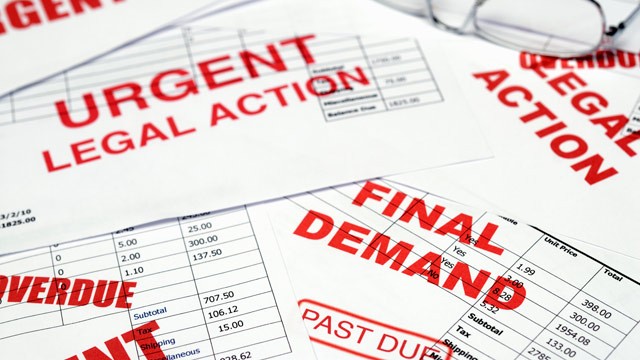
A company’s finances can be in disarray for a myriad of reasons. Sometimes, calculations go wrong. Sometimes, that’s just the way the market is. Sometimes, it can be controlled, and sometimes, it can’t. But there are solutions to most of these problems. One such solution is hiring a collections agency. Here are two ways they may be able to help. 

Image source: aaacoth.com

Collection of payments 

The most important (and most obvious) advantage of hiring a collections agency is for collecting payments. After all, the collection of payments for products or services rendered is the goal of the company. A business cannot run if it doesn’t collect anything. A collections agency takes a huge load of company employees who no longer would need to call or write letters to delinquent clients or accounts. 

Legal protection 

Debtors are generally more afraid of collectors than business owners since collectors have the power to report unpaid credit to the authorities. Many debtors care about their credit score and would rather stay away from this. Some debtors though may choose to go to court to dispute collections. Collection agencies are not afraid of this since they’re armed with the vast knowledge of Federal and state laws. 

Image source: yourmoneymentor.com

Brennan & Clark is a collections agency and a member of the Commercial Collection Agency of the Commercial Law League. The firm offers unparalleled service and the most comprehensive guarantee in the industry. Learn more about the company and its services here.

Monday, April 10, 2017

A Few Key Terms From The Debt Collection Industry

The collection industry in the United States is a vast one. After all, over 30 million Americans and businesses owe money to someone somewhere. It is important that people know some key terms when dealing with, or hiring a debt collection agency. Here is the first part of the key terms series that people might need to know about collections.

Image source: bankruptcy.uslegal.com
Accounts receivable is the money clients (whether people or companies) owe to another company for being provided goods or services, or both. It is a line of credit, or an IOU.

Arbitration is any informal hearing called for a dispute.

Balance sheets are financial statements containing the assets and liabilities, as well as the shareholders’ equity at a given time.

Bankruptcy is declared by an individual or a company when they are no longer able to pay their debts.

Cash flow is the money that goes in or out of an account in a period of time.

Co-debtor is one of two (or more) entities who are liable for the same debt.

Credit limit is the maximum amount of credit that any financial institution can give its customers or clients.

Image source: accountingweb.com
Customer relationship management, or CRM is the strategy used by many businesses to help customers get what they pay for.

Income statement is the financial statement that shows the net revenue, and how it becomes net income. This is also considered a profit and loss statement.

Brennan & Clark LLC is an agency that specializes in business collections. Learn more about them and the services they offer by visiting this blog.

Tuesday, March 14, 2017

Know Your Debt Collection Rights: A Guide To The Laws That Protect You

Having your account transferred to a collections agency does not signify the "death" of one’s business. Financial analysts understand that there are mitigating circumstances that may cause a company to be late in its payments. That said, many executives take the hit rather seriously and consequently ignore the realities of the situation. This includes not knowing or understanding their rights. Reputable collections agencies remind their clients on both sides that they strictly abide by mandated laws. There are laws that limit what debt collectors can say or do.

Image Source: cnn.com.de
The Fair Debt Collection Practices Act (FDCPA) defines the limitations on what every debt collector can do when collecting particular types of debt. The federal law also describes how debt collection is reported in credit reports all with specific state protection policies. The FDCPA encompasses the debt collection of mortgages, credit cards, medical debts, and other debts that for personal, family, or household purposes.

There are many stipulations recorded in the FDCPA, but all of these policies are based on the foundation of protecting consumers from debt collection companies that use abusive, unfair, or deceptive practices to collect debt. While the FDCPA does not cover business debts, company owners should know that unlawful or abusive acts of business debt collection agencies such as calling at irregular hours or practicing rude behavior are still considered unlawful. For these cases, entrepreneurs can speak with a legal professional to see what actions can be taken. It is highly recommended though to talk to the collections agency first before considering any legal action. Usually, the company will handle its representatives personally. However, if there is indeed a discrepancy between the company and the collections agency, it may be best to seek a mediator. It is also suggested to keep a record of all correspondence as proof of evidence.

Image Source: entrepreneur.com
One of the reasons Brennan & Clark Collection Agency is a leading collections group is their transparency in all of its actions. For more on business debt collections, visit this blog.

Wednesday, February 15, 2017

Factors To Consider Before Hiring a Collection Agency

Business experts agree: hiring a collection agency is a good idea. This allows entrepreneurs to focus on their core competencies while ensuring that any debts or outstanding balance to their company are being properly addressed. Before engaging in any collection agency though, it is important that business owners take these factors into consideration.

Image Source: thebalance.com
Micromanaging: Understand that moving delinquent accounts to a collection agency means letting the latter do the business for you. This sounds obvious, but many entrepreneurs forget this -- especially during the first part of the process. It is also typical for clients to bypass the procedure and call the business owner to "work out a deal" once they find that they’ve been placed under an agency. Owners must recognize that all handling processes need to be referred to the agency. If the debtor calls the owner, they must be firmly but politely told to speak with a representative from the collection agency.

Each collection agency is different: Choose an agency that fits your budget. Most agencies send payments once a month, and sometimes twice a month. Some charge by the letter or e-mail. There are pros and cons to each type of payment scheme. Business owners should determine which ones best suits their needs. The most important factor to consider would be finances, but should also include the severity of cases.

Image Source: money101.co.za
Results take time: This is true for all collection agencies. Indeed, choosing the right agency does speed up the process a little, but business owners should understand that agencies never force people to pay their debts within a given time frame. Agencies need time to process and work on the account. Agencies are also required by law to give the debtor 30 days to request verification of the debt or dispute it.

Brennan and Clark is a top collection agency in the country. The company has achieved its success due to its practical and effective strategies. Learn more when you like this Facebook page.

Tuesday, January 10, 2017

What People May Not Know About Business Credit Scores

Business collections impact heavily on a company’s business credit score, which in turn has a huge effect on the business’ overall success. Here are a few choice facts on business credit scores.

Image source: money.cnn.com


  • Personal FICO scores have a range between 300 and 850. Business credit scores, however, range from 0 to 100. Companies that provide business credit scores such as Dun & Bradstreet and Equifax have additional scores for risk assessments of companies.
  • Unlike personal credit scores that use a standardized FICO algorithm, business credit scores depend heavily on the bureau.
  • Business credit scores and reports only have information on accounts on the business. There is no personal information. However, companies that lend credit and issue credit cards also look at personal credit information as well.
  • Few people can only access personal credit reports. Business credit reports though are public, which means anyone can gain access to the information for a fee.
  • Though bureaus that are responsible for giving business credit scores collect and verify information differently, the sources they gather information from are generally the same.
  • On some occasions the information business credit bureaus report is flawed. But this is easily remedied when a company provides evidence that the numbers are different.

Image source: blog.fundinggates.com


Brennan and Clark helps companies eliminate credit losses by providing them with assistance on improving their collection process, which generally helps with their credit scores. Learn more about the company’s services by visiting this Facebook page.

Wednesday, December 14, 2016

Protecting The Company Credit Against Scammers And Frauds

Scams have evolved in complexity, and have become more devastating to people and companies. The increasing sophistication of scams is also tied with the advancement of technology. Many companies have incurred debt, and had their credit score ruined by scammers. Protection from scams and frauds could very well save the business from being scuttled by such malicious practices.

Image source: michaelangelobosch.com

First things first. Business owners should know the scams that target their businesses, and how these are executed. A good example would be text messages that employees receive requesting vital information about the company. The identities of these text message senders should be verified, and approached with utmost caution and scrutiny. Company management should also warn their employees about giving certain information online to websites.

Image source: webair.com

Business owners and management really have a big role to play when it comes to the safety of their companies. From the start, rules and regulations have to be put in place to protect both their companies and their employees. The only time company employees can share information is when the party with which they’re exchanging information has done similar transactions with the company in the past.

Business owners should also make sure that their internal systems are secure. Passwords to their computers and their websites (if they have any) should be changed at least twice a year.

All these can help protect a company from fraud and scams, and ultimately lead to a favorable credit score.

Brennan & Clark, a member of the Commercial Collection Agency of the Commercial Law League, is a business collections firm that offers world-class service.  Read more about debt collection and the industry here.

Wednesday, November 16, 2016

What Businesses Should Know About Credit Extensions

A lot of companies extend credit to their customers with the idea that this will help them gain more business. While extending credit may seem like a good decision for some companies, it is not always the case.

Businesses like retail stores, healthcare providers, and transportation services require straight cash transactions for their rendered services. But other business types pursue extended credit. Offering credit can get customers to spend more which can turn into increased sales. It can also establish healthy company-customer relationships.

Image source: theatlantic.com
Many businesses offer credit in hopes that they can sell better than their competitors. But offering credit can bring more losses than gains for some companies, especially with startups and local businesses. Credit can cost the company money. When a seller offers credit, the customer is using the product they have on loan, but the company gets nothing from it until they are paid.

Image source: nerdwallet.com
When companies offer credit, they assume that the customer has the intention and ability to pay. They look at customers as blank, clean slates who can pay on time. But often, customers take full advantage of the credit, causing the company to lose money. Being aware of a customer’s credit rating and history can be a great way to know about their intentions of paying. Offering credit is not always bad, but it could cause damage if it is given to the wrong customer.

Brennan & Clark is a collection agency that helps businesses get profit through customized receivables support solutions. More about the company’s services here.